

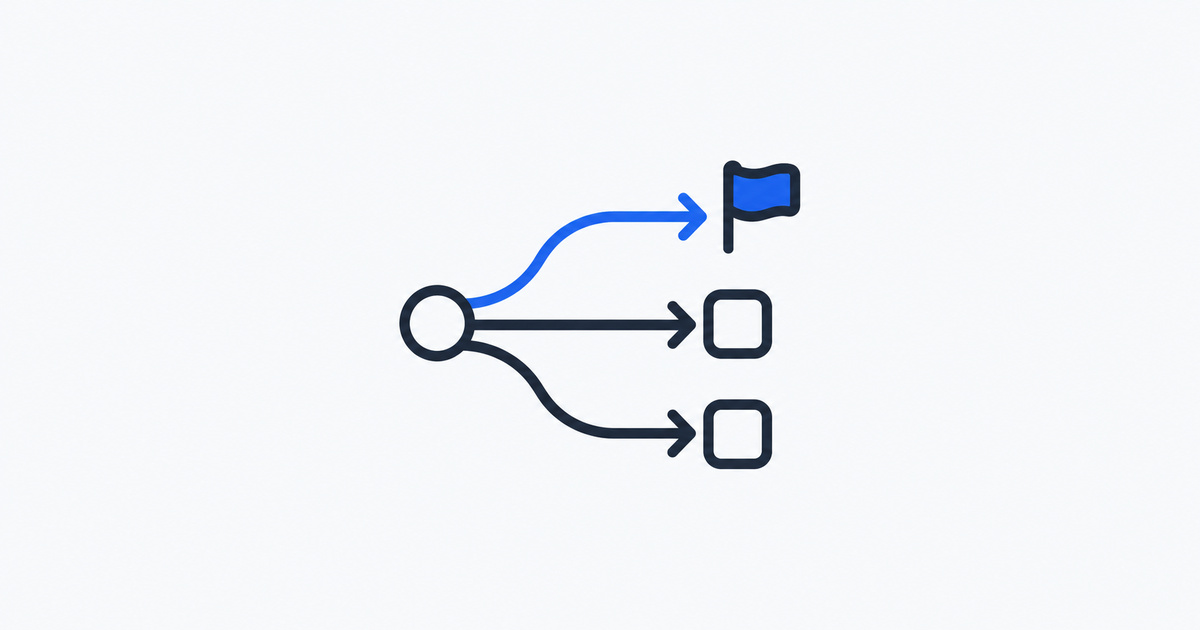
Test a small number of channels one at a time, measure each one honestly, keep what brings customers and drop the rest. For an early SaaS, a few simple tests beat a plan with many channels running at once.
Growth marketing is often described in language that makes it sound like a secret craft: hacks, loops, funnels, flywheels. For an early SaaS, it is much plainer. It is the habit of trying a small number of ways to reach customers, measuring each one honestly, keeping the ones that work and dropping the rest.
This guide covers how to run those tests properly, which channels are worth trying first when you have little time and little money, how to decide when a test has told you enough, and how to avoid the mistake that wastes the most effort: growing something that customers leave.
Growth is a testing habit
Early on, you do not know which channel will work for your product. Advice from other founders helps, but it comes from different products, different customers and different moments. The only way to learn is to test.
A good test is small, has a clear question and has an end date. A bad test is a vague commitment to “do more social media” that runs forever without anyone being able to say whether it worked.
The shape of a good test
Write each test as a short note before you start:
- Hypothesis. “If we answer questions in this community for four weeks, we will get at least ten visits to our comparison page and at least two signups.”
- Audience. Which customer group the test is aimed at.
- Effort. The time you will spend, in hours per week, and any money.
- Success threshold. The result that would make you continue. Decide it before you see any results.
- Duration. A fixed length, usually between two and six weeks depending on the channel.
- What you will record. Visits, signups, conversations and anything you learn about the customers it brings.
Setting the threshold in advance matters. Without it, there is a strong temptation to read any result as encouraging, and tests end up neither proving nor disproving anything.
Test one thing at a time
If you launch three channels at once and signups rise, you will not know why. Run channels in a sequence where possible, or at least change one major variable at a time. Small teams get cleaner answers from sequential tests than from simultaneous ones.
Keep a log
A simple spreadsheet is enough. One row per test, with the hypothesis, dates, effort, results and a verdict: continue, change or stop. Six months later, this log will be one of your most valuable assets. It prevents you from repeating failed experiments and shows patterns in what works.
A simple way to choose what to test first
With many possible channels, a quick scoring method helps you pick. For each candidate, give a score from one to five on three questions:
- Reach. How likely is it that my specific customers are here?
- Effort. How easy is it for me to run this well? A higher score means easier.
- Speed. How soon would I know whether it works? A higher score means faster.
Add the scores and start with the highest total. It is not a precise instrument, but it forces you to think about all three questions instead of choosing whatever looks exciting.
Channels worth testing first
The following channels suit an early SaaS because they require little or no budget and give answers within weeks. Each section explains what to test and what to watch for.
1. Direct outreach
Reaching out personally to a short list of people who fit your best-fit customer description is the fastest way to learn.
What to test:
- A list of thirty to fifty named prospects.
- A short message that refers to something specific about them and their situation.
- A simple request: a short conversation about how they handle the problem today, not a sales pitch.
What to watch: reply rate, the language people use to describe the problem, and how many conversations turn into trials. Even if few convert, these conversations improve every other channel.
Outreach works best when your customer group is small and findable. It works poorly when you cannot name who they are.
2. Communities and forums
Places where your customers already discuss their work are a natural channel: forums, groups, discussion boards and chat communities.
What to test:
- Spend a few weeks reading and answering questions without mentioning your product.
- Note which questions repeat, since those are page ideas.
- Where your product is directly relevant to a question, mention it briefly and honestly, and follow the community’s rules.
What to watch: how people respond, which questions bring follow-up conversations, and whether visitors from the community behave differently from other visitors. Be careful not to treat communities as advertising boards. A reputation for being helpful builds slowly and is lost quickly.
3. Directories and launch platforms
Directories and launch platforms list products by category, and many buyers browse them while deciding what to look at. They can also bring some early visitors and references to your site.
What to test:
- A listing on a small number of directories that fit your category, with an accurate description written for your best-fit customer.
- A launch on a platform where early adopters look for new products, timed with something worth announcing.
- Tracking each listing separately, so you can see which bring visitors who sign up.
What to watch: the quality of visitors, not just their number. A listing that brings few visitors who sign up is more useful than one that brings many who leave. Be cautious with submitting to hundreds of sites at once. A short list of relevant, well-run directories is better.
4. Content for buyers who are comparing
Search-driven content takes longer, but it compounds. Test it by publishing a small set of pages aimed at people choosing between tools, such as one comparison page and one page for people leaving a specific competitor.
What to watch: impressions in Search Console in the first weeks, then clicks, then signups. The first signs of progress are visible early, even when traffic is still small.
5. Partnerships and integrations
If your product works alongside another tool, that tool’s users are a natural audience.
What to test:
- A well-built integration with one popular tool your customers already use.
- A listing in that tool’s marketplace or app directory, if it has one.
- A short guide for users of that tool showing how the two work together.
What to watch: referral traffic, signups that mention the partner, and any support requests that show where the integration falls short. Partnerships take longer to set up than outreach, but a good one keeps bringing customers without ongoing effort.
6. Newsletters and podcasts your buyers follow
A trusted voice with an audience that matches yours can be a fast route to the right people.
What to test:
- A short list of five to ten newsletters or podcasts your customers read or hear.
- A genuine offer: a useful guest piece, an interview, or data or a tool the audience would value.
- A modest sponsorship, if the numbers make sense, with a way to track visitors from it.
What to watch: the response from that specific audience. Small, focused publications with engaged readers often outperform large general ones for a niche product.
7. Free tools and templates
A simple free tool, calculator or template related to the problem you solve can attract the right visitors and earn links.
What to test: one small resource that takes a few days to build, offered with an optional prompt to try the product.
What to watch: whether the people who use it match your customer description, and whether any of them go on to sign up. It only works if the resource is genuinely useful by itself.
8. Referrals and product-led loops
Once you have happy customers, ask them to share. Some products have natural sharing built in, such as shared documents, invitations to collaborators or branded pages that others see.
What to test: a simple prompt at a moment of success inviting users to share or refer, and one feature that exposes the product to a user’s colleagues or clients in a way that is useful to them.
What to watch: how many invitations are sent, how many are accepted and how those users compare with others. Loops need a decent base of satisfied users, so they come later than the channels above.
9. Paid advertising, later
Paid channels can scale what already works but are expensive ways to find out what works. Test them once you know the value of a signup and have a landing page that converts.
What to test: a small, capped budget on one channel and one audience, with a clear target cost per signup.
What to watch: cost per signup against the value of a customer, not clicks.
When to stop a test
Stopping is a skill. Three outcomes are possible at the end of a test:
- Continue. The result met or beat your threshold. Keep the effort going and look for ways to improve it.
- Change. The result was close, or you have a specific reason to think a different message or audience would do better. Run one more round with one change.
- Stop. The result fell clearly short and you have no strong reason to expect a different outcome. Record what you learned and move on.
Be careful with the “change” option. It is easy to keep adjusting a failing test indefinitely. Allow yourself one revision per channel, then decide.
Do not grow a leaky product
Growth that brings people in but does not keep them wastes everything above. Before you scale any channel, check retention. A few simple questions help:
- What share of new users reach the first moment of value?
- What share are still active after the first month?
- When customers cancel, what reasons do they give?
If many people leave quickly, the highest-value work is not another channel. It is the first experience of the product, the onboarding and the match between what you promise and what you deliver. Fixing this multiplies the return on every channel.
A common way to organise these questions is a short chain: how people find you, how many start, how many reach value, how many stay and pay, and how many tell others. Looking at where the chain is weakest tells you whether to test a new channel or improve what happens after signup.
Build a rhythm
Growth work suits a regular rhythm better than sudden bursts.
- Weekly: check your numbers, run the current test and log what you see.
- Monthly: review the log, decide which tests continue, change or stop, and choose the next test.
- Quarterly: step back and ask whether your customer description, message and offer still fit what the data shows.
Keep the number of active tests small. Two or three at a time is enough for most solo founders, and fewer is fine.
Common mistakes
- Running tests with no threshold and no end date.
- Starting several channels at once and learning nothing.
- Judging a slow channel as if it were a fast one.
- Counting visits instead of signups, or signups instead of activated users.
- Copying a channel because it worked for someone else’s very different product.
- Scaling spending before retention is understood.
- Never recording results.
Where a listing fits among your tests
A directory listing is one of the simplest tests you can run: it takes an hour to set up, costs little or nothing, and shows quickly whether browsing buyers in your category find you.
On SaaSDB you can submit your product and be listed for free if you add the SaaSDB badge to your site. A premium listing is a one-time payment of $6 and does not require the badge, and both options are described on the pricing page. The home page also shows a small number of sponsored slots at $10 a month for products that want extra visibility. Treat it as an experiment like any other: write down what you expect, track the visitors it brings, and decide after a few weeks whether to keep it.
Frequently asked questions
What is growth marketing for a SaaS? It is the practice of testing ways to attract, activate and keep customers, measuring each honestly and investing in what works. For an early product, it means small experiments rather than large campaigns.
Which channel should a SaaS test first? It depends on your customers, but direct outreach and a small number of well-chosen listings are fast and cheap tests. Pair one of them with a slower channel such as content, which builds over time.
How long should I run a channel test? Usually two to six weeks, depending on the channel. Outreach shows results quickly, while search content needs longer. Set the length and the success threshold before you start.
How many channels can a solo founder run at once? Two or three at most, and fewer is often better. Each channel takes time to learn, and results from a few channels done consistently are easier to read.
Should I spend on ads early? Usually not at first. Ads are good at scaling what works, but costly for discovering what works. Start with channels that cost time rather than money, then add paid once you know what a signup is worth.
How do I know if growth is healthy? Look at whether new users reach value and stay. If many sign up and few remain, improving onboarding and fit will do more than adding new channels.